Showing posts with label Camping Gear. Show all posts

8/29/19

Podcast: From Ionic to Iconic- The Story of Nalgene

Science with a Twist did a great podcast about the story of Nalgene bottles. If you're a fan of these iconic water bottles that have become a staple of the outdoor community then you should probably give this a listen!


____________

Share this article with a friend:

8/12/19

20 Uses for a Nalgene

Single-use water bottles are not only wasteful and bad for the environment, but they are also just that- single use. Recently, we asked our employees to come up with a list of uses they have for a reusable Nalgene bottle aside from just drinking out of it. We received a ton of answers and some of them were pretty out there (seriously, our employees have done some weird things with Nalgenes). Without further ado, here is our list of the 20 best uses we received.


1) First Aid Kit- Keep your medical supplies together and dry.
2) Tent Pee Bottle- When it's too cold or too much work to get out of your tent at night but you need to relieve yourself.
3) Food Container- Save a ziplock bag by storing food in your extra bottle.
4) Nails, Nuts, & Bolts Storage- We've all got those miscellaneous nuts and bolts that no longer have their original packaging but we refuse to throw them away because someday they might be exactly what is needed.
5) Message in a Bottle- Hopefully you're never stranded on a desert island and this use is just for fun with friends.
6) Fire Starter Kit- Keep various kindling dry and ready to start a fire in any conditions.
7) Rolling Pin- If your kitchen is too small to keep a big, wooden pin in it just for the occasional rolling of dough.
8) Cookie Cutter- If round cookies are all you crave then you are set.
9) Geocaching- Insert a logbook, pen, and some tchotchkes, bury it, and post the coordinates.
10) Hot Water Bottle Heater- Snuggle up with a bottle of hot water at night for radiant warmth.
11) Hammer Tent Stakes- There's not always a rock around when you're setting up camp.
12) Lantern- Wrap a headlamp so that the light points in to the bottom of your bottle.
13) Ice Pack- Fill it up with some ice and ease those injuries.
14) Muscle Roller- Roll out your muscles wherever you are.
15) Waterproof Container- It doesn't just keep water in, it also keeps it out.
16) Washing Clothes- Clean your socks and undies on the go with soapy water and some shaking.
17) Vase- Glass breaks. Give your flowers a safer home.
18) Toothbrush Holder- Keep those bristles clean.
19) Winter Car Kit- Keep some small essentials like an emergency blanket, mini flashlight, handwarmers, and more together in case of a roadside emergency.
20) Weight for Bear Bag- Tie a line to your bottle with some weight in it and chuck it over a branch for raising your food bag out of bears' reach.


What did we leave out? Let us know your alternative use for a Nalgene!

____________

Share this article with a friend:

7/12/19

Gear Review- Peregrine Radama Hub


I had a chance to take out the Peregrine Radama Hub 4-person tent last weekend and it was a pleasant surprise. It’s more on the heavy side for a tent, but it’s not designed to be the backpacking, lightweight variety. As primarily a car-camper, I need a tent that will last and standup to the more frequent abuse that comes with car camping. I was pleased to see that the poles on this are slightly thicker DAC poles. They were very easy to set up and incredibly sturdy once connected to the tent.
I’m no fabric expert, but I would guess the tub of the tent to be a 40 or 50D fabric. This is a rather durable thickness and middle-of-the-road industry wise, but I would still pair it with an optional footprint. The tub sides also come up a good 4 inches around the entire perimeter of the tent. Combined with the fly that extends past the top of the tub, and I wasn’t concerned at all about rain getting in. It rained both days I was out using it and the interior stayed perfectly dry. The tent fabric was much thinner and lighter, but I’m not concerned about its ability to last. My one concern would be the mesh sections, as it is with most tents. It was incredibly thin and light so you would want to keep any sharp objects like knives or tree branches far away if using without the fly. However, what I’m not concerned about is stepping on the tent door. Peregrine was genius here. Instead of the typical door that zips towards the floor, necessitating you to constantly step over or around the door to avoid damaging it, they designed the door to unzip towards the ceiling. They then integrated a pocket into the ceiling to stuff the door in. This is AMAZING! You can also unzip the entire door using one hand. Huge plus here.


The fly also has some very nice improvements to it. There are 2 ventilation areas at the top of the fly that allow all the moisture to escape while still covering the mesh ventilation at the top of the tent. No more waking up to condensation covering everything. Rain blowing sideways? Just close the ventilation openings with a Velcro clasp. The fly doors are also easy to manage with magnetic clasps where you roll the door back. Say goodbye to messing with those little toggles when setting up or when it starts to rain. Just give it a little tug and it pops off and is ready to be zip closed.


Let’s talk about the storage. This tent has tons! I counted 9 pockets including the door storage areas. There are 3 pockets that run the entire length of one side of the tent, 2 pockets in opposite corners, and 4 pockets on the ceiling. They have done away with the hanging gear loft and instead have built-in pockets. Like having a gear loft, you say? There are still 4 little loops that you can attach an optional gear loft to. There is also a hook right in the middle of the ceiling where you can hang a lantern, string lights, or finally put up that divider so your roommate doesn’t end up spooning you in the middle of the night. The fly also extends several feet past the door to give you (2) vestibules to put shoes, gear, or bags if you need a little extra floor space. They have also designed the walls of the tent together with the poles to give you more headspace. The walls are near vertical so no more dead space that is common with more angular tents.


I’ve been using a Marmot Limelight for years and the Radama Hub had all the same features plus more. When packed down, the 4p Radama was just barely bigger than my Limelight 3p. I will definitely be replacing the Marmot and using the Radama Hub as my primary car camping tent.


by Steve Wise-
Steve is what you would call a "Jack of all trades." Whether it’s scaling a rock face, dropping in a couloir, or chilling on the back nine, you will typically find him outside. Adrenaline activities such as downhill mountain biking and jumping off a 400 ft canyon are some of his favorites, with the addition of whitewater paddleboarding the past few seasons. He’s no stranger to the leisure life though, as he recently took 2nd place in a local pickleball tournament. He has a passion for sharing his love of the outdoors with others and has pursued opportunities in both sales and marketing for the outdoor industry. His most rewarding endeavor was teaching kids how to ski and snowboard for 3 years in Park City, UT. He recognizes that none of this would have been possible without excellent gear to make it happen and is on a constant hunt to find that next piece.


Photos by: Adam Kittell

Learn more about the Peregrine Radama Hub at www.PeregineEquipment.com
Also available for retailers through Liberty Mountain.
____________

Share this article with a friend:

5/10/19

Gear Review: Peregrine Kestrel UL 2

Recently I had the pleasure of going on a backpacking trip in New Zealand. The past few years whenever I’ve backpacked it has been in Utah so I haven’t bothered bringing a tent and opted instead to just pack a tarp for building a shelter with if needed. This trip was with my wife though and she had never been backpacking before (also I knew there would be lots of sandflies) so I figured I should get a lightweight, 2 person backpacking tent for the excursion. I decided to try the Kestrel UL 2 tent by Peregrine since the weight, size, and price seemed right. This tent is just over 3 lbs, which is comparable to the award winning Big Agnes Copper Spur UL2. It packs down just a tad smaller than its Big Agnes rival as well. The price tag on the Peregrine saves $80, so I figured I would give the underdog a shot.

As soon as you get your hands on the tent in its storage sack there’s no doubt that this thing is made for ultralight backpacking. I had to open it up and make sure everything was in there since it felt like that couldn’t possibly be the full packed weight, but it was all there! The materials it is constructed with are noticeably thinner than the other tents I've owned but they felt premium and purposeful. I didn’t have time to test it out closer to home before my trip, or even look at how to set it up, and instead just threw it in my bag and caught a flight across the world.


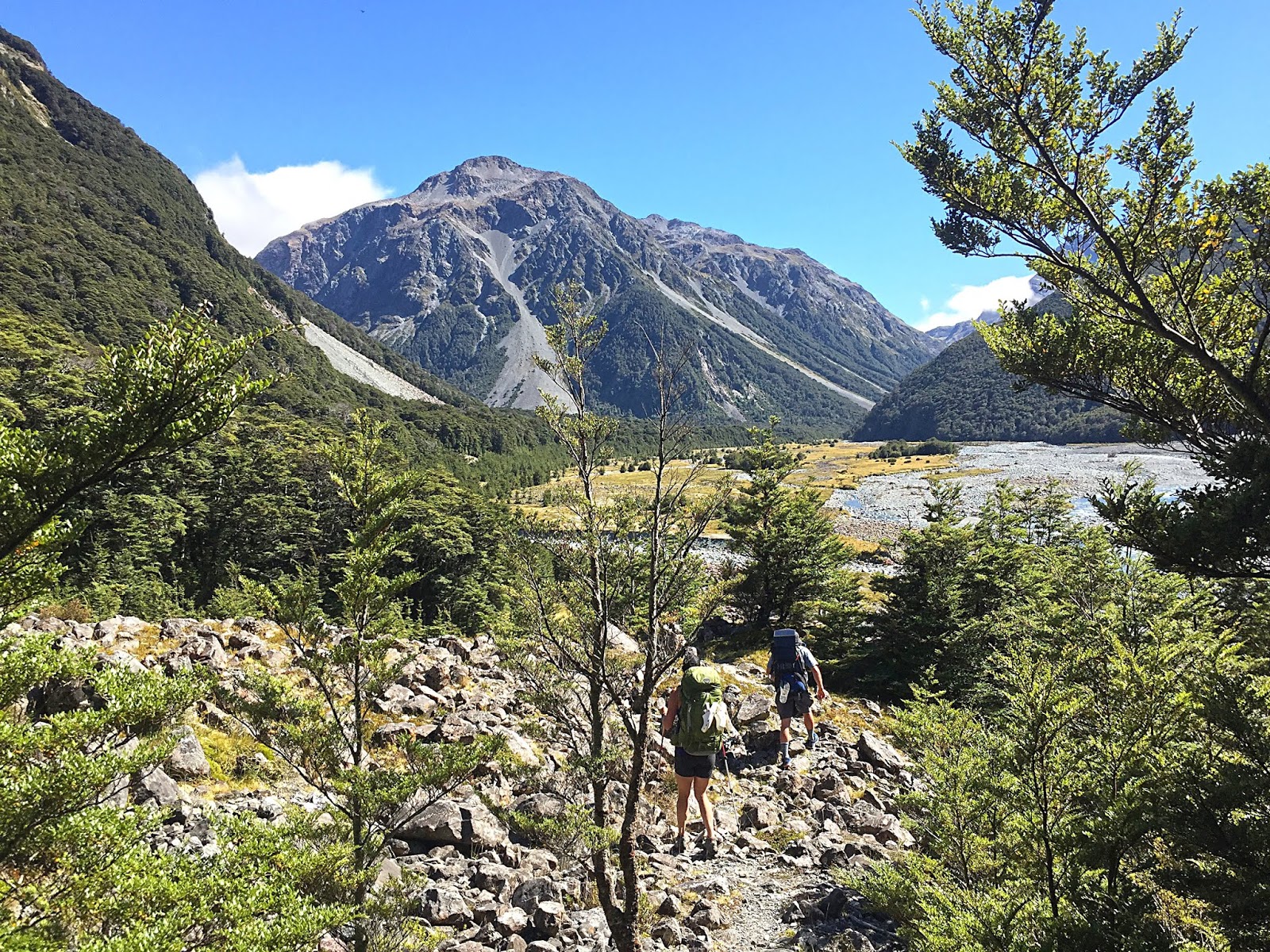
Headed into Artur's Pass with the crew. Photo by Adam Kittell

The first few nights of our trip we backpacked through an area that had “huts” for crashing in. Apparently they use the term hut pretty loose in New Zealand, because these things were basically cabins that slept tons of people in bunks. Some even had large rooms for cooking and hanging out in. It wasn’t until night four that we actually had to bust out the Kestrel. Since I’m a man, I didn’t bother to read the instructions for how the tent sets up and just dove right into it with the help of my wife; that way I could blame her if it didn’t go well (it's a joke). The process was very intuitive and the setup took only a few minutes. The single-pole design eliminates the common tent issue of figuring out how multiple poles go together. Due to the asymmetric shape of the whole tent, it was obvious which ends of the poles went with which end of the tent but there was color coding to the pole tips as well. Everything snapped into place and attached to form a well-structured tent that felt sturdy. With the rainfly on and the guylines pulled tight it looked like the tent would hold up well in rain. This speculation was confirmed since it poured all night yet no water got into the tent. It also didn’t budge at all during the howling winds while we weren’t in the tent weighing it down. I can see how there could be some concern that the tent wouldn’t fair well in a storm since it is so lightweight, but the materials seem to have been very purposefully chosen and it passed the weather tests.


With the rain fly on we experienced full protection from the elements. Photo by Adam Kittell

The first thing my friends all commented on about the tent was how nice it looked. The colors really pop and the small Peregrine logo on the side of the rainfly is subtle yet classy. They didn’t feel the need to advertise the brand in gigantic letters across the whole tent like some manufacturers do. The fly and bottom of the tent are ripstop nylon, which means that if you do happen to puncture the tent the hole will not spread outside of the affected area and you can just throw a patch over it. The walls of the tent itself are fully mesh so that if the night looks like there won’t be rain you can ditch the fly and have great views of the stars and excellent ventilation, while still being protected from bugs. If privacy is a concern you would definitely want to use the fly though since without it you and your tent mate, if you have one, would be quite visible to other campers close by. The Kestrel UL 2 also has a Fast Flight option which allows you to ditch the body of the tent altogether and use just the rainfly, pole, and footprint for an even lighter option, if that’s your thing.


Enjoying 360 degrees of viewing without the rain fly on. Photo by Adam Kittell

The interior of the tent has six pockets which I found to be quite nice for getting items out of the way yet still kept close at hand. The roof of the tent is divided up into four rather large pockets and there are two additional pockets in the lower corners (one on either side of the door) so that each occupant has a place by their head for the essentials. The center ceiling hook was nice for hanging a headlamp for some light before bed. Four additional ceiling loops expanded the options for hanging items overhead. The interior is 86 inches long and 37 inches wide at the head, with the width tapering down to 35 inches at the feet. This was plenty big for my wife and I since we are average height, but I certainly wouldn’t try to cram our big dog in there with us or suggest that two NFL players share the tent. The vestibule allowed us to keep our shoes and wet rain gear outside of the tent without them getting further soaked during the night. These features were all built into the tent instead of being cost-increasing additions like many other tents brands that sell you a separate vestibule or gear loft in addition.


The four built-in overhead pockets make for great storage/organization options. Photo by Adam Kittell

After having used this tent for a week in a variety of conditions including bugs, rain, humidity, cold, and wind I feel confident in putting my stamp of approval on it. I will definitely be using it again for many more trips now that my wife has decided that backpacking isn’t so bad after all. Considering I will likely continue carrying the majority of our weight on these trips, I am pleased with how light it is. It’s certainly not as light as just carrying a tarp and some paracord, but the comfort and peace of mind that it brings are worth the 3 extra pounds.

Photo by Adam Kittell
For more info about the Kestrel UL 2 and to check out more great Peregrine products, visit peregrineequipment.com.

by Adam Kittell-
Adam has worked in the outdoor industry for a few years as a merchandise specialist, buyer, and most recently in marketing. Prior to that he was a guide at multiple wilderness therapy companies. He has spent weeks at a time living out of a backpack starting at a young age and later living out of a Honda Element. He has guided extended trips backpacking, rock climbing, mountain biking, and canyoneering all over the United States. Some say he has an obsession with gear, and he does not disagree with them.
____________

Like what you read? Share this article with a friend:

9/21/16

Gear Review: Peregrine Camping Products

Photo from Trail and Ultra Running's post
The crew at Trail and Ultra Running recently took a few Peregrine Camping products along on some of their race travels. They tested out the Refuge hammock along with a Peregrine strap kit and the Radama 4 tent. 

Here's a sample of what they had to say:

Refuge Hammock: "What sets this hammock apart is its durability and strength compared to the competition."

Radama 4 Tent: "We can say with confidence that if you’re looking for a tent that is comfortable and can sleep a family of 4 right out of the car, the Peregrine Ramada 4 is the right tent."

Read the full article here

9/12/16

Gear Review: Peregrine Radama 6 Tent


The Gear Review team at "Backcountry Exposure" recently tested the Radama 6 tent from Peregrine Equipment. The tent is relatively new to the lineup and makes a great choice for families looking to spend some time in the outdoors. The reviewer Devin says that the tent "kills the competition with the features that are included" and is "perfect for family car camping."

To learn more about the Radama 6 and the full lineup of Peregrine Tents, visit the website here

Watch the full video here


8/23/16

2016 Summer Outdoor Retailer Recap


Another Outdoor Retailer show has come and gone, the streets of downtown Salt Lake City are now a bit less crowded, and all who attended the show are looking forward to new gear hitting the market over the coming months. For those who weren’t able to attend, we’ll give a recap of the “coming soon” products from some of the brands that we distribute.


Peregrine Camping Equipment

Peregrine introduced a new line of sleeping bags, the Altai series. The Altai bags are unique in that they are the first sleeping bag to use a Primaloft down blend as insulation. The blend combines the best qualities of both types of insulation and makes for an extremely compressible and warm fill. The series features 3 bags, with zero degree, twenty degree, and Evo summer bag options. The two warmer bags feature YKK locking zippers and draft collars, while the Evo bag features a non-locking zipper allowing it to quickly convert into a blanket. The Evo summer bag also includes a drawstring closure at the bottom of the bag that can be completely sealed off, and a hood pocket at the top to be used with the bag in blanket mode. All three bags are made with a durable and smooth nylon fabric and feature double zipper protectors to prevent zipper snags.

Peregrine has also released a line of sleeping pads with four models. The inflatable pads come in various widths, thicknesses, and price points to fit almost any camper’s needs.


Cypher Climbing

While there weren't any new shoes or quickdraws from Cypher, the company did show off an all new line of chalk bags. The bags feature unique and playful designs that will stand out at the crag and allow climbers to spice up the look of their harness.


Beal

Beal continues to build on its line of Web-Core harnesses with the introduction of three new lines. The Progress line features non-laminated web core technology and leg loop adjustability in a lightweight package. The new Soft line of harnesses focuses on comfort above all else (except safety of course), and its three harnesses are lined with foam padding for a cloud like fit. The last new line, the Compact, have a wide belt and pack down small. The Mirage harness in this line also features a Recco reflector, making it perfect for mountaineering and ice climbing.


Grivel

Grivel adds to its streak of innovation with loads of new gear. The Clepsydra small will soon be available and was designed as the ultimate belay carabiner. The Tau Twin Lock features an innovative new locking mechanism and is a light and versatile fully locking biner. Grivel’s new Ghost ice axe is ultralight and perfect for ski tours and fast and light mountaineering. The company also introduced a line of trekking poles that are stable, ultralight, fold down very easily, and make a great option for hikers and trail runners. The Airtek 28 backpack is a lightweight climbing pack that features a curved bottom panel to allow easy access to the gear on the back of a climbers harness. As if this all wasn’t enough, Grivel also introduced two new ice carrybiners for racking ice screws, an ultralight model made of plastic, and a full strength aluminum carabiner.


Vaude
The folks at Vaude have also been coming out with some rad new gear. Building off of the lightweight daypacks introduced last year, the company introduced the Zerum line of ultralight trekking packs. They feature a supportive and breathable mesh back panel and weight in at just under two or three pounds depending on the size. Also new for 2017 is the Brentour line of backpacks. These packs are ventilated, made for heavier loads than the Zerum, and feature outer mesh pockets, making a perfect place for stashing stinky or wet clothing. As with all Vaude packs, the new lines are manufactured with the highest commitment to sustainability and environmental responsibility.


Signings and Events

Liberty Mountain was able to host a number of professional climbers in the booth for poster signings and athlete meet and greets. We partnered with ClimbOn products for signings with Tommy Caldwell, Beth Rodden, and Jonathan Siegrist. A few athletes representing brands distributed by Liberty Mountain were there as well including Stevie Haston, Angela VanWiemeersch, and Pamela Pack.


We were also excited to host a signing for copies of a new Salt Lake City climbing guide “The Granite Guide” authored by Liberty Mountain’s own Nathan Smith, along with Andrew Burr and Tyler Phillips. As there was a limited number of copies available, we had climbers lining up more than 30 minutes before the signing began to make sure they got their own copy.

Overall the show was very successful and as always, a chance to mingle with friends from the industry that we love. We're excited for the upcoming launches of these new products and look forward to the innovation that will come about before the next show.

____________

Share this article with a friend:

6/19/16

Gear Review: Ion Micro Stove


The gear experts at Camping Stove Cookout recently included the Olicamp Ion Micro Titanium stove in their list of "Best Backpacking Stoves." The Ion Micro is currently the lightest and most compact canister stove available, and is perfect for Ultralight obsessed backpackers looking to cut ounces wherever possible.

In their review, CSC says "This stove tucks away and goes almost unnoticed while backpacking, then performs with the best when put to task boiling water or cooking a meal."

Later on they add "If you want to keep your backpack as light as possible and still have a great little stove as a companion, you may have found it here with the Olicamp Ion micro stove."


Learn more and see other Olicamp offerings here

6/9/16

Gear Review: Olicamp Kinetic Stove


The camp stove experts at Camping Stove Cookout recently published a review of the Olicamp Kinetic Ultra Titanium Stove, an ultra-lightweight canister style backpacking stove. The stove weighs in at only 1.7oz thanks to its titanium build, and can boil water in 3 1/2 minutes.

The reviewer states "It’s the dimensions and construction that is a huge selling point for most. Being incredibly light and made from titanium, it’s not going to rust and the construction is very strong. This is always a huge plus for me, I need that peace of mind that I can set up camp and not be let down."

He continues "The customer reviews over on Amazon are flawless. There are literally no unhappy owners at this point and that says volumes about this stove. As you will know as well as I do, backpackers are not very forgiving if they get let down by equipment. No worries about that with the Olicamp.
This Kinetic stove is also very affordable, and with it’s unique features and the pots that come with it you’re all set right out of the box. I expect to see a lot more from Olicamp with regard to backpacking tools and equipment in the future."


To learn more about this and other Olicamp products, visit their website